Your Favourite Family Photo Might Not Be the Posed One
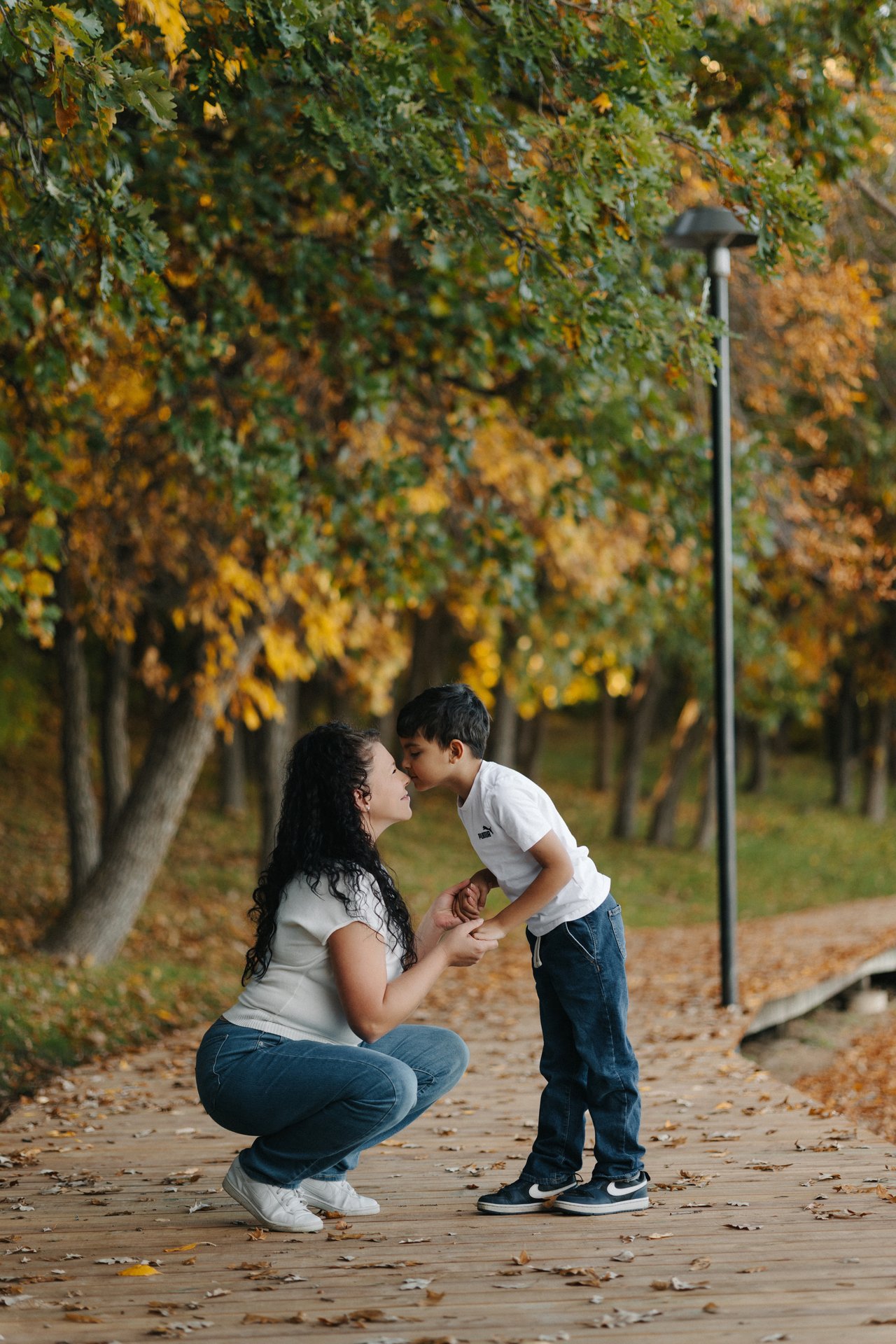
There is a particular photograph many parents imagine before a family session: everyone together, faces visible, all looking towards the camera. It is a lovely photograph to have. But when you look through a family gallery, another frame may be the one you return to. A child halfway through a movement. A parent bending down to meet them. A cuddle where the camera seems to have become unimportant.
Those photographs are not simply the space between the proper portraits. They can be part of the story in their own right. In this family series at Minnewasta in Morden, there are moving photographs, individual portraits and quieter moments beside the water. Together, they show how much variety can fit into a family session without asking everyone to hold the same expression.
Looking at the Camera Is Only One Way to Show Connection
Eye contact with the camera can make a strong portrait. You can see faces clearly and enjoy the feeling of everyone being present together. That matters, especially when you are choosing a photograph to share with relatives or a portrait for a particular place in your home.
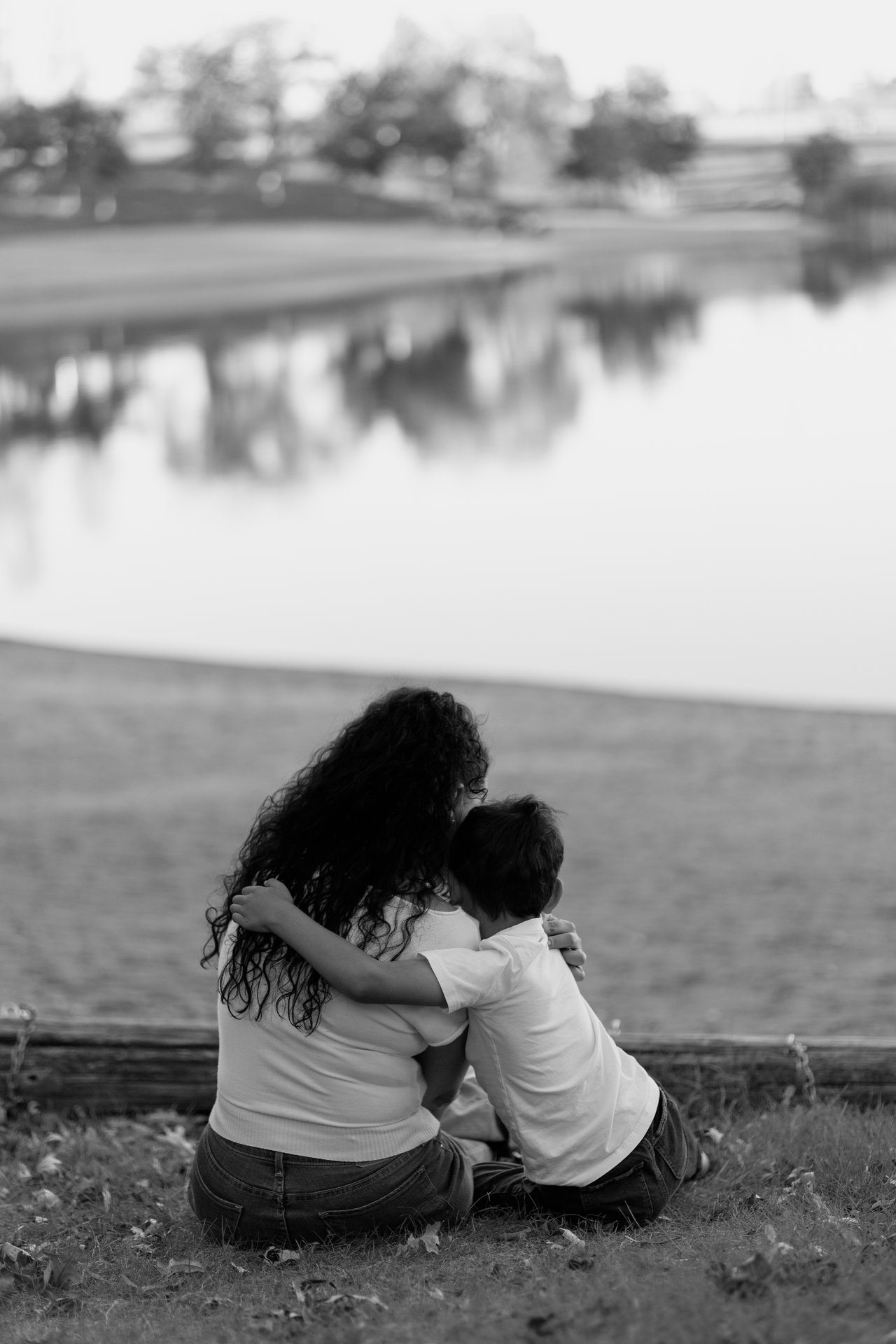
But connection also exists between the people inside the frame. A child looking at a parent gives the viewer a different kind of information. You can see where their attention is going. A photograph made from behind can show how closely two people sit together. The expression may be partly hidden, but the relationship is still visible.
Ask What the Photograph Lets You Notice
Instead of judging every image by whether all eyes face forward, look at the details. Where are the hands? Is someone leaning closer? Does a child’s posture feel familiar? Sometimes the smallest visible gesture makes a photograph recognisable as your family, rather than simply a well-arranged group.
You do not have to choose between a clear portrait and a photograph with movement. Both can belong in the same gallery. The purpose of variety is to give you different ways of remembering the people, rather than make every picture meet one narrow definition of a successful family photograph.
Movement Can Bring Personality Into the Frame
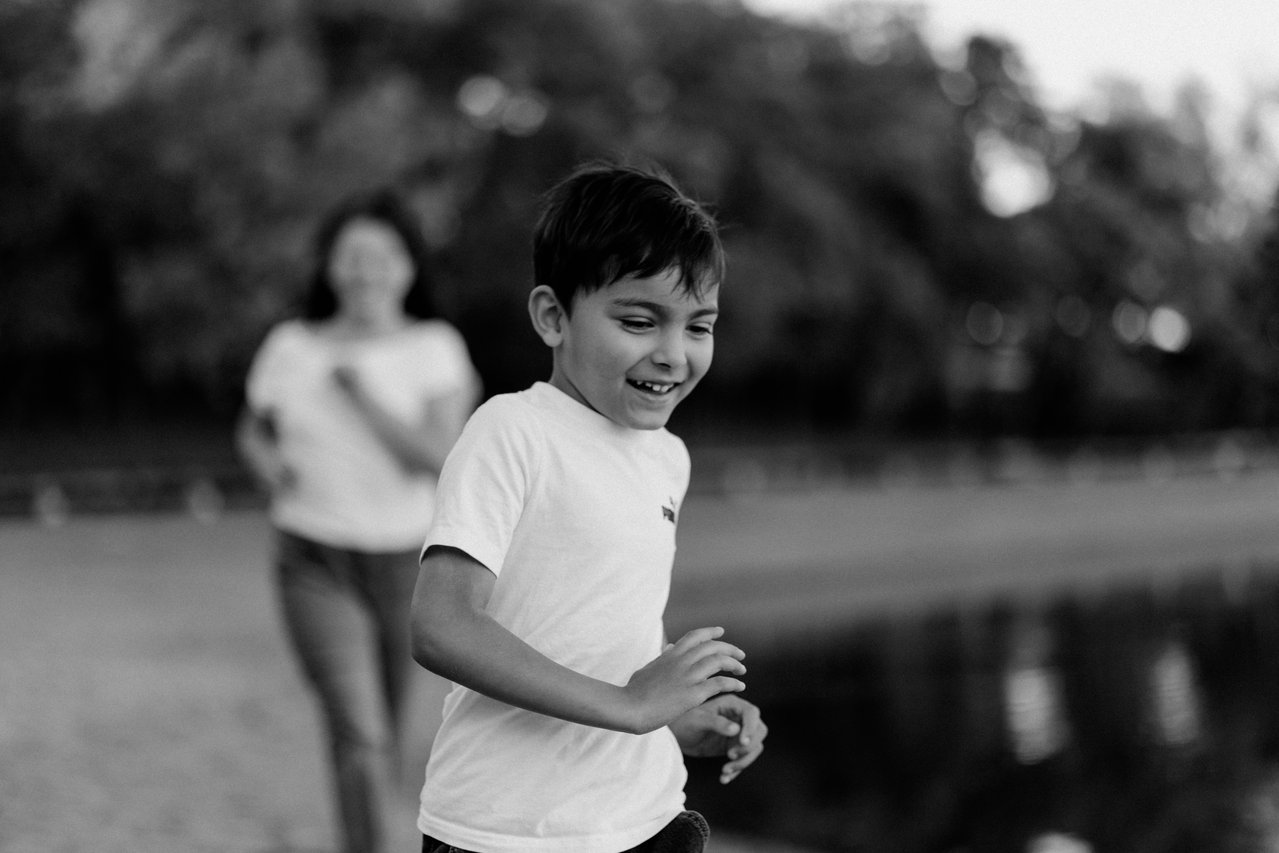
When a child walks, turns or moves past the camera, their body does something different from a rehearsed pose. Their attention may shift away from being photographed. In the black-and-white image in this series, a child moves through the foreground while an adult remains farther behind. The space between them helps the photograph feel like a moment in progress.
That does not mean a session needs constant running or a list of games. Movement can be as small as changing direction, reaching for someone or taking a few steps together. The activity should suit the child and the setting. A family photograph does not need a performance to feel alive.
Choose Something Your Family Can Actually Enjoy
A short walk or a moment sitting together can give people a starting point. If the action feels awkward or a child does not want to join in, it is useful to change the idea. The photograph should come from an interaction the people are comfortable with, rather than from keeping a prompt going at any cost.
This is also why I would not ask you to practise a collection of activities before the session. You can tell me what your children enjoy and how they tend to respond to new situations. That is more useful than arriving with a routine everyone feels they must complete.
Quiet Photographs Have Their Own Energy
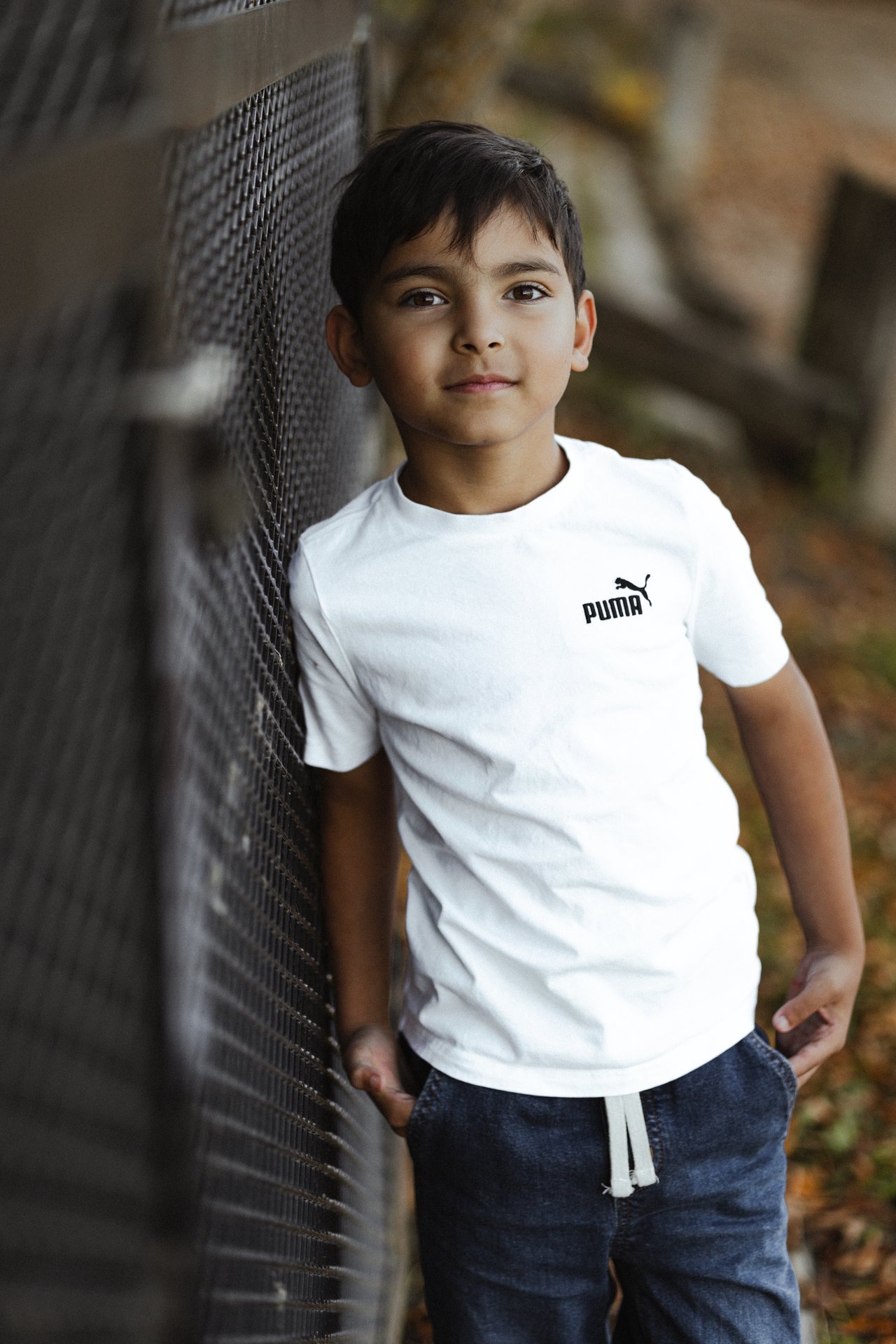
A lively family gallery does not have to be full of laughter. A child standing still, a parent looking towards the camera or two people sitting close can give the collection breathing room. Quietness can be just as recognisable as playfulness.
In this series, the individual portrait of the child has a different feeling from the moving frame. Neither cancels out the other. One photograph holds attention on a face; the other includes the space and movement around it. Putting them together makes it easier to see a person beyond a single expression.
There Is No Required Mood for a Family Session
Your child does not owe the camera a smile in every frame. A thoughtful expression or a moment of concentration can be worth keeping, too. That is different from continuing to photograph someone who needs a break. When a child is uncomfortable, the next step is to respond to them, rather than decide that discomfort will make an interesting picture.
If there is a kind of photograph you would rather not have made or shared, say so. The meaning of a family photograph belongs first to the people in it. A photographer’s preferences should not become pressure to accept an image that does not feel right for you.
A Small Change in Distance Changes the Story
Wide photographs leave space for the setting. Closer photographs bring attention back to a face or a gesture. A pair of people seen from behind can make the scene feel more private, while a direct portrait invites you to meet their expression. These are choices about what the viewer will notice first.
When you are looking through your gallery, try considering a small group of photographs together. One might show where you were. Another might show how you stood or sat together. A third might bring you closer to a child’s face. You can build a meaningful selection without asking one photograph to do every job.
Choosing the Photographs You Want to Live With
Start with the images that make you pause. You may love a family portrait because it shows everyone clearly. You may choose another because you recognise a particular expression or the way your child reaches towards you. Both are valid reasons to keep a photograph.
For a small wall arrangement, you could combine a wider family frame with a closer portrait. For an album, you can include changes of pace: movement, a pause, a detail, another person. These are suggestions for enjoying the pictures you already love, rather than rules about how a family collection should look.
Share Your Priorities Before the Session
If having a clear group portrait matters most, mention it. If you are drawn to photographs with less direct posing, explain what you like about them. Showing a couple of examples can help us talk about the feeling you want without trying to copy another family’s exact moment.
For clothing, you can use my guide to family photo outfits. For the practical arrangements, read about planning a family session in Morden. Those decisions support the experience, but the photographs still have room to reflect the people who arrive on the day.
Family Photography in Morden and the Surrounding Area
I am Sergey of Pogrebnoys Photography, based in Morden, Manitoba. I photograph families in Morden, Winkler, Winnipeg and Southern Manitoba within a radius of up to 300 km from Morden. The family photographs in this story were made at Minnewasta in Morden.
Whether you would like an outdoor session with movement or something quieter, tell me what matters to you. We can begin with the people, the setting and the photographs you hope to keep. You do not need to decide in advance exactly how every moment will look.
Frequently Asked Questions
Does everyone need to look at the camera in family photographs?
No. Direct portraits and photographs of people interacting can both be valuable. Tell your photographer if a clear group portrait is a particular priority for you.
Do natural photographs mean there is no direction?
Not necessarily. A simple suggestion such as walking or sitting together can provide a starting point, while leaving room for the people to respond comfortably.
What if my child prefers quiet moments to games?
There is no requirement to be playful throughout a session. Quiet portraits, close moments and time with a parent can contribute to a varied family gallery.
How can we choose a balanced set of family photographs?
Begin with the photographs you feel connected to. You might combine a clear family portrait, a wider view, a close expression and a moment of interaction, without expecting one picture to show everything.
Ready to Book Your Session?
Explore my family and portrait work and send an inquiry with your location, who will be joining and the photographs that matter most to you. We can plan for the group portrait and leave room for the moments you might not have thought to put on a list.